
Strong customer authentication: a summary of the key sources regarding SCA

Wichtige Informationsquellen für SCA | PayTechLaw

The 14th of September 2019 marked the deadline for the implementation of the new requirements regarding strong customer authentication (SCA). On 21st August 2019, the German Federal Financial Supervisory Authority (BaFin) extended the deadline for payment services providers domiciled in Germany with respect to online credit card payments (see here for my blog entry on “strong customer authentication”). Those of you who are interested in reading again what SCA entails, can find an explanation here.

Despite this, many questions have still not been clarified. This is why we have put together a summary of what we (currently) believe to be the key sources regarding SCA in the following infographic. You can use these sources to gain a better understanding of your SCA obligations.

Key sources regarding SCA are therefore just a click away. Have fun!
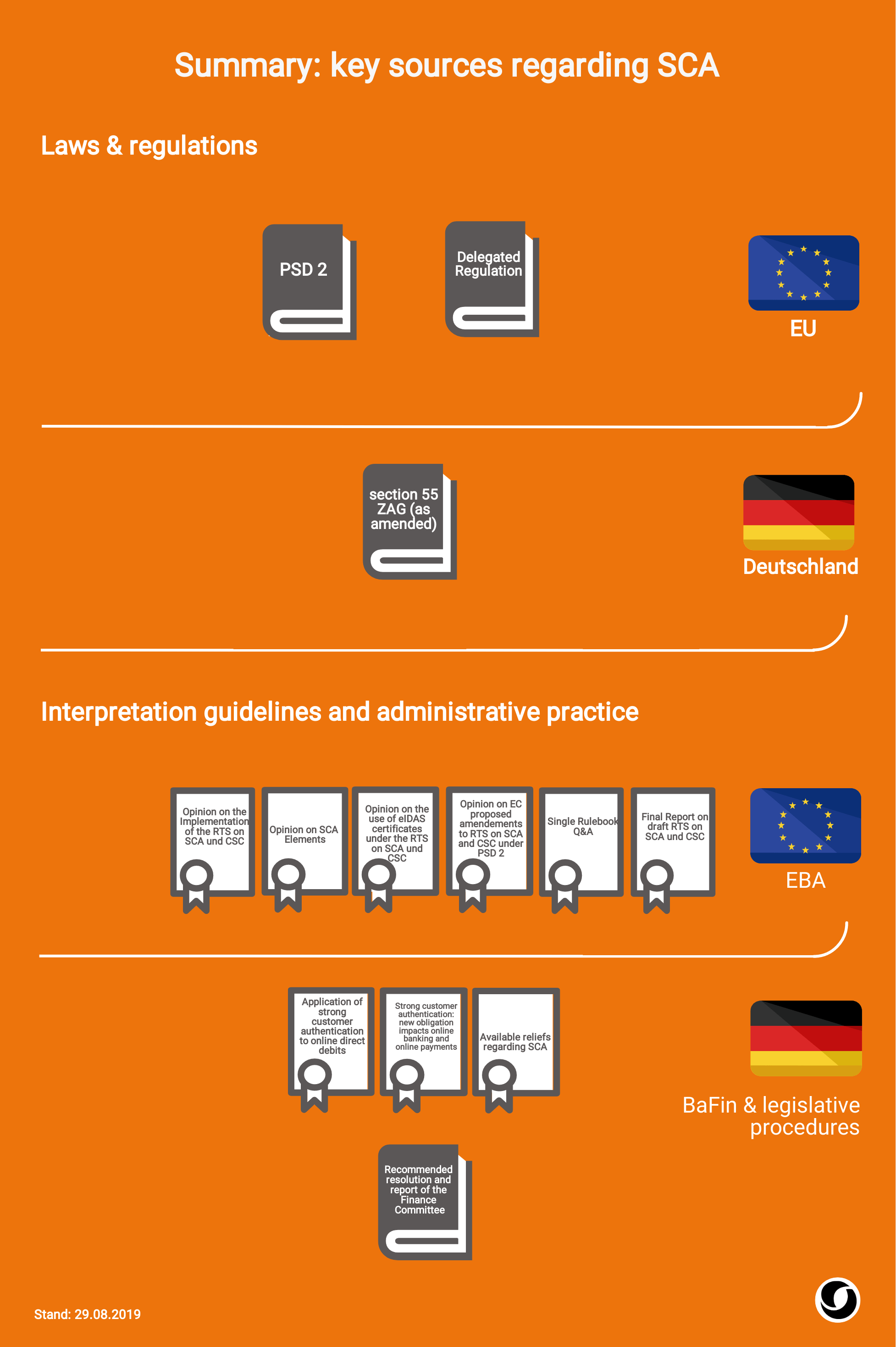
Strong customer authentication: a summary of the key sources regarding SCA 1


Cover picture: Copyright © fotolia / BillionPhotos.com



By continuing, you accept our privacy policy.
You May Also Like
Virtuelle IBANs im Visier Was die neue Bafin-Aufsichtsmitteilung für Banken und Zahlungsdienstleister bedeutet Virtual IBANs under BaFin scrutiny: New AML expectations for banks and payment service providers
Read More

Virtual IBANs under BaFin scrutiny: New AML expectations for banks and payment service providers

Virtual IBANs have become an established component of modern payment models. With Supervisory Notice 06/2026, BaFin now clarifies its expectations for credit institutions and payment service providers regarding transparency, anti-money laundering compliance and risk management in complex virtual IBAN structures.
Read More
PFOF-Verbot
Read More

The PFOF ban comes into force: What the new BaFin supervisory statement means for brokers and neobrokers

Since 1 July 2026, the ban on Payment for Order Flow (“PFOF”) has also been in force for purely domestic business relationships in Germany. On 22 July 2026, BaFin published a supervisory statement on this matter, in which it sets out in concrete terms for the first time which business models it considers to be compliant with the rules - and which are not.
Read More
FIU-Jahresbericht 2025 – Wesentliche Entwicklungen im Überblick FIU Annual Report 2025 – Key Developments at a Glance
Read More

FIU Annual Report 2025 – Key Developments at a Glance

Germany's FIU recorded a historic number of suspicious activity reports in 2025, while the number of analytical reports declined significantly. Alongside new regulatory requirements and a stronger international focus, neobanks have emerged as a key pillar of reporting activity. This article analyses the most important developments and highlights the questions that remain unanswered in the annual report.
Read More
EuGH schafft Klarheit: Nicht jede Weiterleitung von Geldern Dritter ist ein Zahlungsdienst im Sinne der PSD2 ECJ Clarifies the Scope of PSD2: Not Every Transfer of Third-Party Funds Constitutes a Payment Service
Read More

ECJ Clarifies the Scope of PSD2: Not Every Transfer of Third-Party Funds Constitutes a Payment Service

The ECJ has further clarified the distinction between payment services and other business models. The judgment confirms that merely receiving and forwarding third-party funds does not automatically trigger licensing requirements under PSD2. The decision provides greater legal certainty for FinTechs, platform operators and other businesses handling payment flows, while emphasising that the specific business model remains decisive.
Read More