 Please click here and accept cookies to load the SoundCloud player.
In today’s special anniversary episode of PayTechTalk, I’ll be talking to Alireza Siadat, a lawyer practising in the area of “banking and banking supervisory law” as well as one of the earliest crypto experts. This is what we will be talking about:
Crypto custody business
With the implementation of the amendment directive to the 4th EU Anti-Money Laundering Directive (AMLD5) in Germany, as of 1 January 2020 the legislator has added crypto custody business to the German Banking Act (KWG) as a financial service requiring a licence. We have already looked into this in detail in our blog as well as on other media channels. Pursuant to this, those who offer to others as a service the storing, managing and securing of crypto values or cryptographic keys that are intended to hold, store or transfer crypto values, are subject to BaFin supervision.
Crypto values and cryptographic keys
In order to be better informed as to what constitutes crypto custody business, we have talked in detail about the terms “crypto values” and “cryptographic keys” and have looked more closely at the common buzzwords that are “payment token”, “utility token”, “security token” and “stable coin”.
Grandfathering pursuant to Section 64y KWG
The legislator has introduced certain grandfathering provisions in order to give market participants enough time to adapt their IT systems to the new regulatory requirements. In today’s episode, we will be taking a detailed look into what this means and what requirements market participants have to meet in order to benefit from the transitional rules contained in Section 64y KWG.
Licence to provide crypto custody business
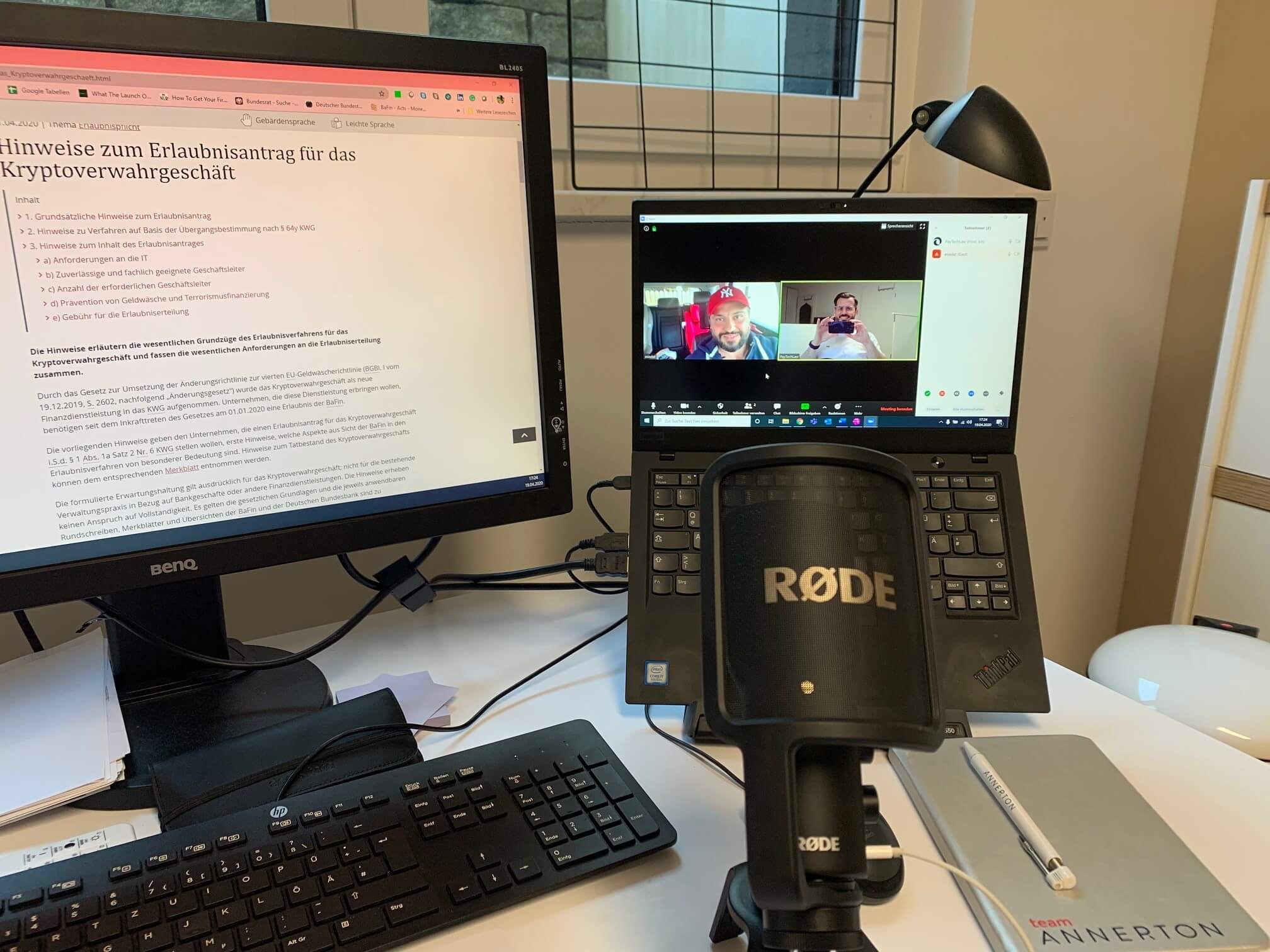
On 1 April 2020, BaFin first published some guidance regarding the requirements that need to be met for submitting a licence application to provide crypto custody business. In its guidance note, BaFin explicitly states that the guidance is neither final nor complete. In addition, BaFin’s guidance notes and official information on applying for a licence under the KWG, the requirements for managers, the MaRisk etc. also apply as well as other legal requirements such as the German Regulation on the Notification and Submission of Documents under the Payment Services Supervision Act (ZAGAnzV) and the German Ownership Control Regulation (Inhaberkontrollverordnung).
In our 50th episode of PayTechTalk, we will be considering in detail how all this is to be interpreted, what other important aspects applicants should definitely be aware of before applying for a licence and what financial dispositions applicants can expect when applying for a licence.
In short, it is well worth listening in. Stay healthy!
Please note that the podcast is in German.
Further information and related links can be found at https://paytechlaw.com/paytechtalk-50-kryptoverwahrgeschaeft-bafin-erlaubnis/
Cover picture: Copyright © PayTechLaw